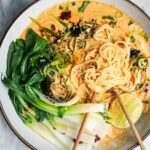
Quick Spicy Coconut Noodles
One pot, 20 minutes, and a seriously cozy bowl of spicy coconut noodles. Part ramen, part noodle soup, they're creamy, easy, PACKED with flavor, and perfect for busy weeknights. They're exactly the kind of quick, comforting dinner I turn to on days I can't be bothered cooking.
Servings: 4 servings
Calories: 395kcal
Ingredients
- 2 tablespoons gochujang paste
- 1 tablespoon light soy sauce
- 2 teaspoons fish sauce or a vegan alternative/more soy sauce
- 2 tablespoons chili crisp or chili oil plus more to serve
- 2 garlic cloves crushed
- 1 tablespoon ginger grated (or use 2 teaspoons of ginger paste)
- 1 lemongrass stalk crushed and chopped into 3 pieces (or use 1 tablespoon of lemongrass paste), optional
- 14 oz can of coconut milk (look for a coconut extract level above 60%) (400ml)
- 4 cups vegetable or chicken broth roughly 1 liter
- 7 oz noodles of your choice like ramen, udon, egg noodles, spaghetti (200g)
- 2 heads of pak choi sliced
- 4 scallions spring onions, finely sliced
- Handful of cilantro coriander leaves
- 1 lime sliced into wedges
Instructions
- Cook the aromatic base. Set a large saucepan over medium heat and add 2 tablespoons of gochujang paste, 1 tablespoon light soy sauce, 2 teaspoons fish sauce, and 2 tablespoons of chili oil. Stir for a minute or two, then add the garlic and ginger and cook, stirring, for another minute.
- Make the broth. Pour in the coconut milk, lemongrass pieces (if you're using them), and vegetable broth. Stir to combine, then bring it to a simmer, lower the heat, and leave it for five minutes to slightly thicken.
- Add the noodles.Add your noodles directly into the broth. This is important as they absorb some of the liquid and release starch that helps to thicken the broth. Stir them through the broth, then let them cook for about 4 minutes. Use your packet to guide you on the cooking time here - different noodles have slightly different cooking times.
- Add the pak choi.Once your noodles are almost ready, add the sliced pak choi and stir through the broth and noodles for a minute, until they look bright green. Remove the pot from the heat. Taste, then season with a squeeze of lime.
- Garnish and serve. Divide the saucy noodles and pak choi between bowls, spooning lots of the lovely sauce into each bowl. Top with the scallions and cilantro leaves. Finish with another drizzle of chili oil, then serve with more lime wedges on the side.
COOKING THE NOODLES SEPARATELY: The recipe - and the amount of stock specified - has been designed for noodles cooked directly in the broth. If you're cooking them separately, reduce the stock to 1½ cups to start with, and add a little more if needed. The noodles won't absorb liquid or release their starch into the broth, so using the full amount will make it too watery.
Notes
COOKING THE NOODLES IN THE BROTH: I've designed this recipe for the noodles to cook directly in the spicy broth, which serves two purposes - it keeps it simple and all made in one pot, and helps to thicken the broth. If you choose to cook your noodles separately, start with just 1 ½ cups of stock, and only add more if needed.
CHECK THE CONSISTENCY: The broth will look quite loose when you add the noodles, but it'll thicken considerably as they cook and release their starch into it. It will also thicken as it sits and the noodles continue to absorb the liquid. For a nice, soupy consistency, they're best served right away. If it starts looking too thick, add a little extra stock or water to loosen it up again.
HOW TO ADJUST THE SEASONING: The saltiness of your broth will very much depend on the stock, soy sauce, gochujang paste, and chili crisp you use. Use low-sodium or homemade stock if possible, and if you find it tastes a bit too salty for you, add ½ teaspoon of honey or sugar, then taste it again. A little water can also help dilute the flavor if needed.
INGREDIENT SWAPS: This recipe is super adaptable based on what you have in your house. You could use green beans, spinach, peas, or edamame beans in place of the pak choi (or add a load of different veggies!) You could also add cooked chicken or throw in some raw shrimp to cook in the broth (add them into the broth when you add the noodles). If you don't have gochujang paste, you could use another chili sauce like sriracha or red curry paste. If you don't have chicken or vegetable broth, use water.
STORAGE INSTRUCTIONS: The noodles will continue to absorb liquid as they sit, so you'll need to add a splash of water (or stock) when you reheat them, just to loosen them up again. They'll keep for 3 days, stored in the fridge, and can be easily reheated, either on the stovetop or in the microwave.
Nutrition
Serving: 350g | Calories: 395kcal | Carbohydrates: 57g | Protein: 15g | Fat: 14.5g | Saturated Fat: 6.6g | Polyunsaturated Fat: 2.5g | Monounsaturated Fat: 4.5g | Sodium: 1690mg | Potassium: 800mg | Fiber: 5.4g | Sugar: 11g | Vitamin A: 830IU | Vitamin C: 55mg | Calcium: 140mg | Iron: 4.5mg