Description
Try your hand at making fresh pasta with no pasta machine or special equipment, no eggs and only THREE ingredients. Rustic hand-rolled pici – like thick spaghetti – are the best place to start. The process is a bit like playing with Play-Doh (with a much more delicious result!)
Ingredients
- 400g plain flour (or use 00 flour or strong (bread) flour)
- 190g warm water
- 1 tablespoon olive oil
- 1 teaspoon salt
- Polenta (or semolina), for dusting
Instructions
- Mix your dough. Add the flour, olive oil, a pinch of salt and the warm water to a mixing bowl. Use a fork to mix the ingredients, until a crumbly dough starts to form. At this point, go in with your hands and start to knead the dough together. Do this for a minute or two, then cover the bowl with a tea towel and let it rest for about 5 minutes.
- Knead the dough. Transfer the dough onto a lightly floured surface, then continue to knead for another few minutes, until it’s soft, smooth and doesn’t feel sticky to the touch. Wrap it in clingfilm and let it rest for at least 15 minutes, and up to two hours. The longer it rests, the easier it will be to form your pici (as the gluten in the flour will have time to ‘relax’). If you’d like extra guidance on kneading, I have a whole post that breaks the process of how to knead down, with photos and step-by-step instructions.
- Roll out your dough. Slice the dough into quarters, and working with one quarter at a time (cover the rest of the dough while you’re not using it), use your hands (or a rolling pin) to roll it out into a rough rectangle, about ¼ inch thick. It’s important to not use flour on your surface when you’re doing this, as this will make it very hard to roll the pici strands. Cut the rectangle into long strips, roughly ½ an inch wide.
- Roll your pici. Use the palms of your hands to roll out each strip into a long snake, a little bit thinner than a pencil (the pici will swell up in the water so you don’t want them too thick at this stage). If you’re having trouble rolling the pici, cover the dough, let it rest for another 10 minutes, and try again. Continue with the rest of the dough.
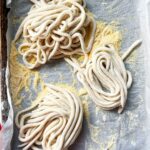
- Dust the pici in polenta. After you’ve rolled each quarter of the dough, dust the finished pici with lots of polenta and flour to prevent them from sticking, form them into a little nest, and place them on a baking paper-lined tray as you continue with the rest of the dough.
- Use or store. The pici is now ready to be cooked, or stored for later use. They’ll cook in about 3 minutes in boiling water, ready to be tossed through your favourite pasta sauce. If you want to store it for later, the best way to do this is to freeze it. Place your tray straight into the freezer, then transfer the pici nests into ziplock bags once they’re frozen. You can then cook them straight from frozen (will take 4 minutes).
Notes
TIPS FOR SUCCESS: Don’t use any flour on your surface when you roll out the pici. You need the stickiness of the countertop (or a wooden board) to roll out your pici effectively. Flour will make it very hard and it’ll be SUPER annoying (I have made this mistake before!) Dust your rolled pici with lots of polenta (or semolina) and flour to prevent them from sticking. Roll your pici a little thinner than you think they should be – they’ll expand as they cook so keep that in mind.
SERVING SUGGESTIONS: Serve the pici with any pasta recipe you like – it’s wonderful in spaghetti carbonara, or anything very saucy that it can cling to. Try using it in this tomatoey ‘nduja pasta, super green rigatoni, creamy mushroom Alfredo or spicy gochujang pasta.
HOW TO MAKE SQUID INK PICI: Just add two teaspoons of squid ink to your pici pasta dough, and reduce the water by 10 grams.
- Prep Time: 10
- Resting time: 15
- Cook Time: 3
- Category: pasta
- Method: hand-rolled
- Cuisine: italian
Nutrition
- Serving Size: 100g