
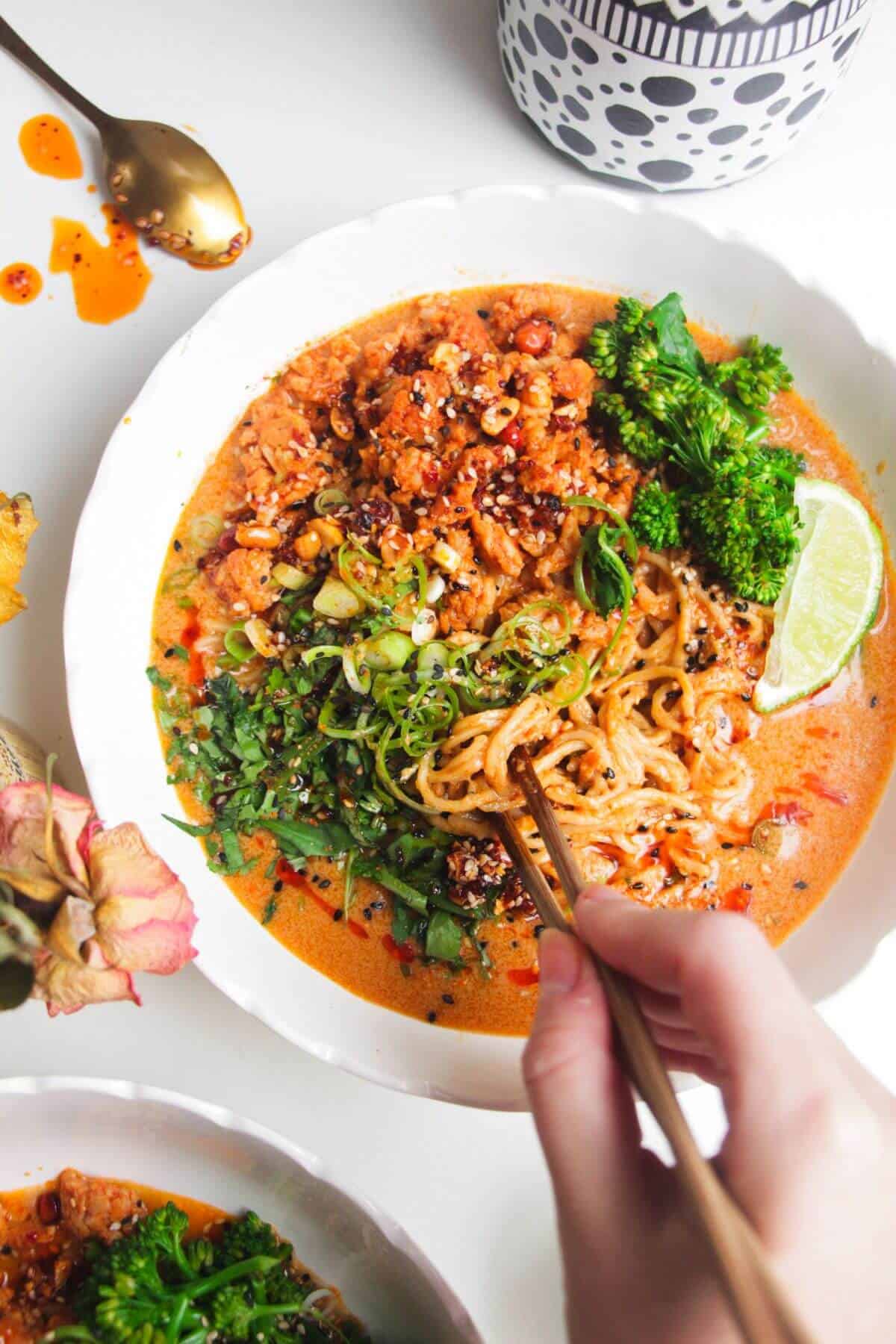
These super saucy one-pot chicken satay noodles, inspired by the classic satay chicken skewers, are a fabulous meal for any day of the week. Slippery noodles simmer right in the creamy, coconutty peanut satay sauce, then get topped with sticky gochujang chicken, fresh herbs, chili oil, and a big squeeze of lime.

Table of Contents
- Satay Chicken Noodles, at a Glance
- Why Satay Noodles Work So Well
- Ingredients You’ll Need
- How to Make Satay Noodles
- Kate’s Tips for the Best Satay Noodles
- Watch How to Make Satay Noodles
- Satay Peanut Noodles FAQs
- Like this recipe? Try these satay-inspired ideas next
- One Pot Saucy Peanut Satay Noodles with Chicken Recipe
Satay Chicken Noodles, at a Glance
⏰ Total time: 30 minutes
🍽 Serves: 4
🛒 Key Ingredients: Peanut butter, ground chicken, noodles, gochujang paste, coconut milk, chicken stock
🧠 Skill level: Beginner-friendly
🔥 Cooking Method: One pot, stove top
💪 Protein: 49.5g per serving
🥗 Perfect For: Cozy weeknight dinners, a better-than-takeout night in, easy meal prep lunches.
💕 Why You’ll Love: They’re super easy, super creamy, saucy, satay-chicken inspired noodles, made in one pot in 30 minutes for a warming meal for any night of the week.
Why Satay Noodles Work So Well
A big, warming bowl of saucy, luscious satay noodles is exactly the kind of dinner I want when I’m craving something comforting, quick, and loaded with flavor. Inspired by the take-out favorite satay chicken, these are pretty special. Part ramen, part noodle soup, part saucy noodle bowl, they take 30 minutes (max!) to make and largely use store cupboard staples.
I’m topping them with lovely sticky gochujang ground chicken, which adds extra protein (but you can skip it and simply make the peanut noodles, or replace it with crumbled tofu).
These noodles use a similar formula to my quick spicy coconut noodles, which are more gochujang-heavy and even quicker to make! You might also like this one-pot coconut butternut squash ramen.
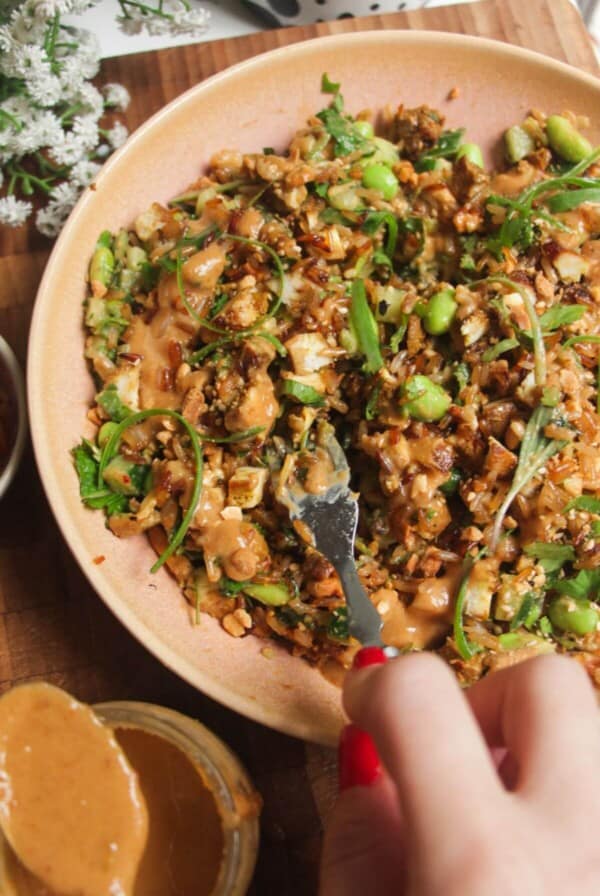
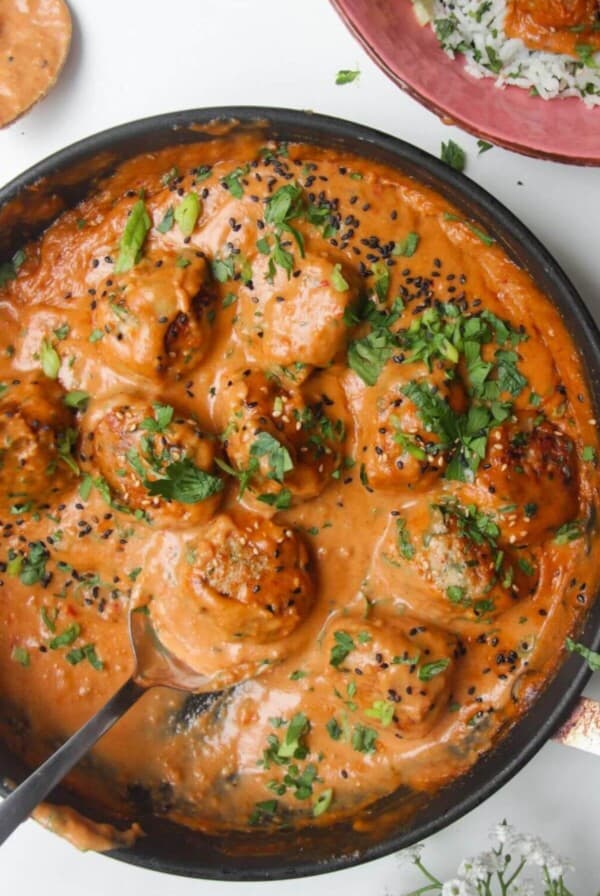
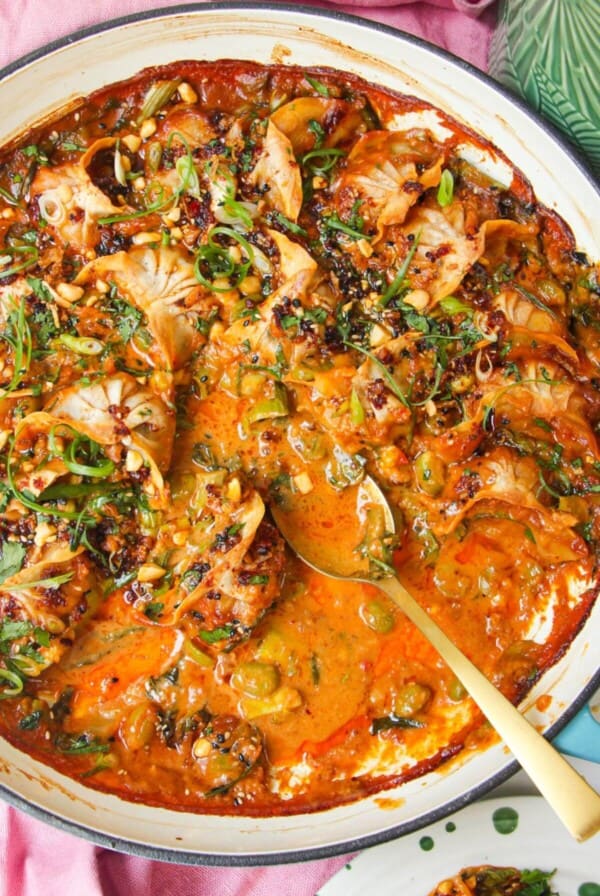
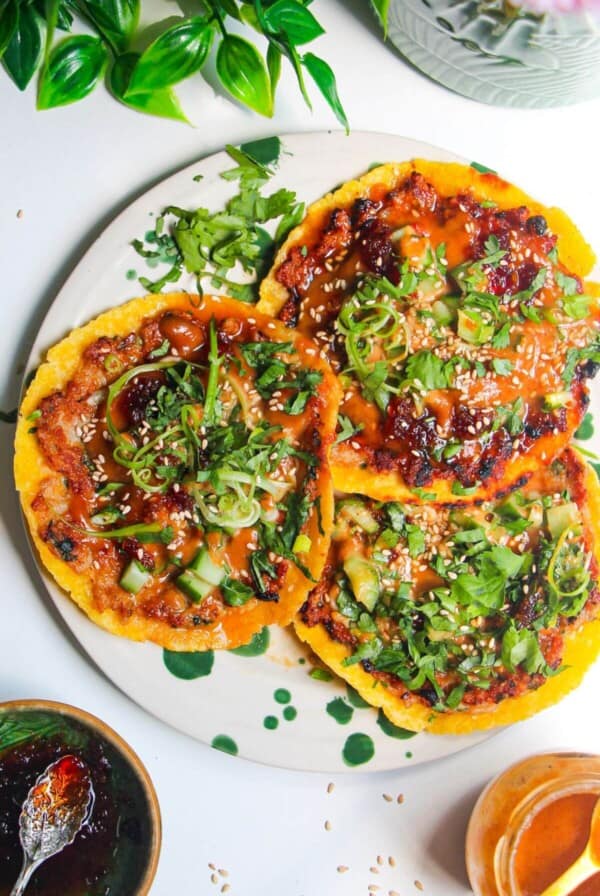
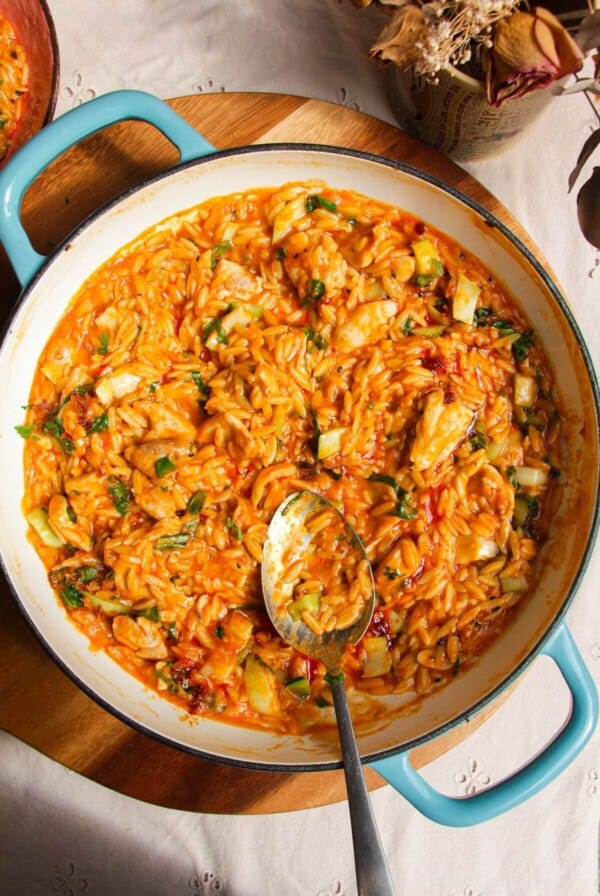
If you love these satay-inspired flavors, I think you’ll also enjoy this satay crispy rice salad, charred peanut butter chicken, one pan baked satay dumplings, satay chicken flatbreads and one pot saucy satay chicken meatballs.
“So warming! Swapped out chicken mince for pork and used udon instead of ramen. With a broth this good, it’s great that the other ingredients are flexible.”

Ingredients You’ll Need
I’d say the must-haves are peanut butter, coconut milk, stock, light soy sauce, garlic, ginger, the noodles, and some kind of chili element.
The toppings and protein are where you can play around – you don’t need every single one if you can’t find them.
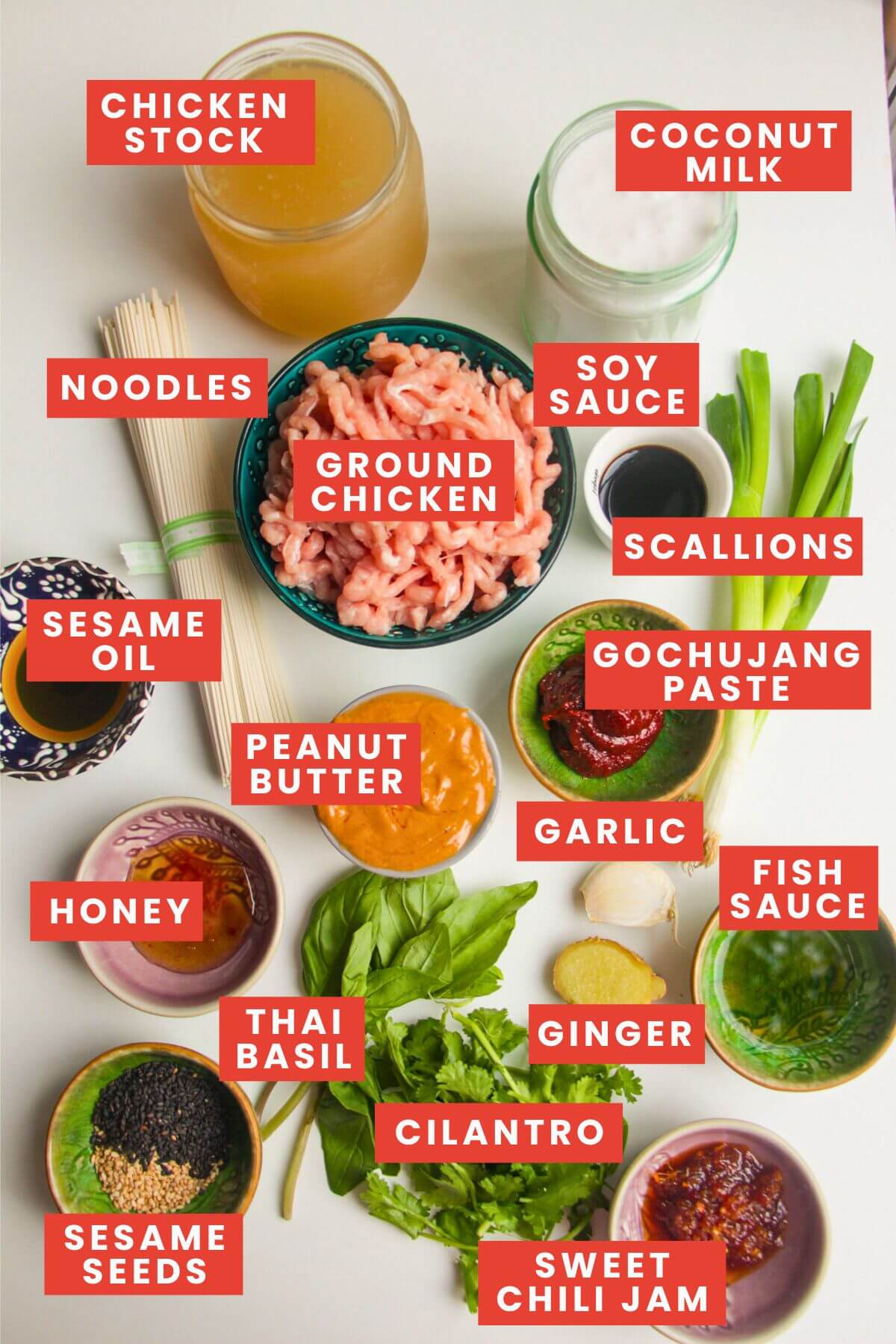
- Peanut butter. For the best flavor, I recommend using natural peanut butter here (peanut butter that lists only peanuts and salt in the ingredients list). Ones with added sugar and oils will impact the flavor of the sauce, so keep that in mind if you do use brands with those additions.
- Noodles. I’m using ramen noodles, but you can use whatever you like. Udon, rice noodles, or regular egg noodles are great. Just check the packet instructions so you know how long they need to cook in the sauce.
- Coconut milk. I like using coconut milk with a coconut extract percentage of 60% (or higher) for the best, creamy flavor. Sometimes you’ll find the coconut and liquid will have separated in your can – if this happens, you can mix them back together, or just add it separated to the pot as it’ll come back together as it warms up.
- Gochujang paste. This sweet, spicy Korean fermented chili paste is one of my most-used ingredients. It’s super savory, and I highly recommend using it here if you can. You’ll find it in the Asian section of grocery stores, or you can pick it up from Amazon. If you can’t find it, use red curry paste, sriracha, or sambal oelek.
- Fish sauce. I promise this won’t make the sauce taste fishy – it just adds a lovely, deep savory flavor you won’t get from salt alone. You can skip it if you like, or use an extra teaspoon of soy sauce.
- Ground chicken. I love this sticky gochujang chicken topping here, and ground chicken works brilliantly with the noodles. It really mixes into the sauce. But you can use chopped chicken thighs or breast pieces if you prefer. Or, use crumbled tofu, Quorn pieces, or a plant-based ground meat alternative for a vegetarian version.
“So tasty! Made a vegetarian version with Quorn pieces instead of mince. Reduced the noodles and added capsicum, green beans, and mushrooms.
Also only used three cups of stock rather than five for a slightly thicker soup. So good topped with a sprinkle of lime and sesame seeds. Will definitely be making it again! Yum!”
How to Make Satay Noodles
This is a step-by-step photo overview of how to make the noodles – the full recipe with ingredient quantities is at the bottom of the page for you.
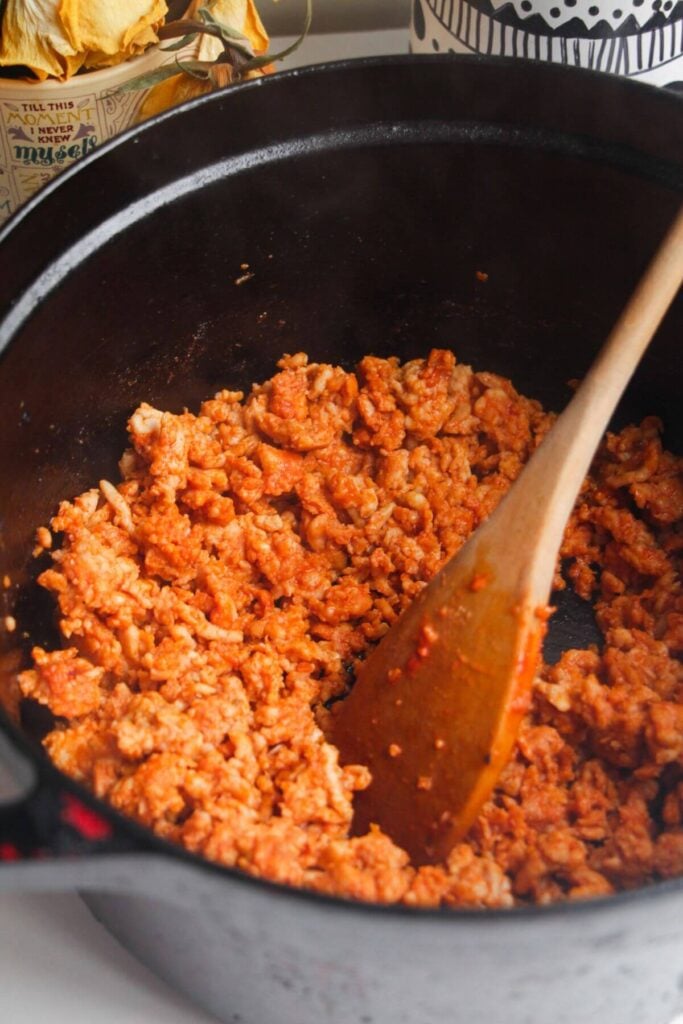
- Cook your sticky gochujang chicken topping first, then remove and set it aside until you’re ready to serve.

- Add the gochujang paste, garlic, ginger, soy sauce, fish sauce, and sweet chili jam to the same pot and cook for a couple of minutes before adding the peanut butter.

- Add your stock and coconut milk and whisk until super smooth.
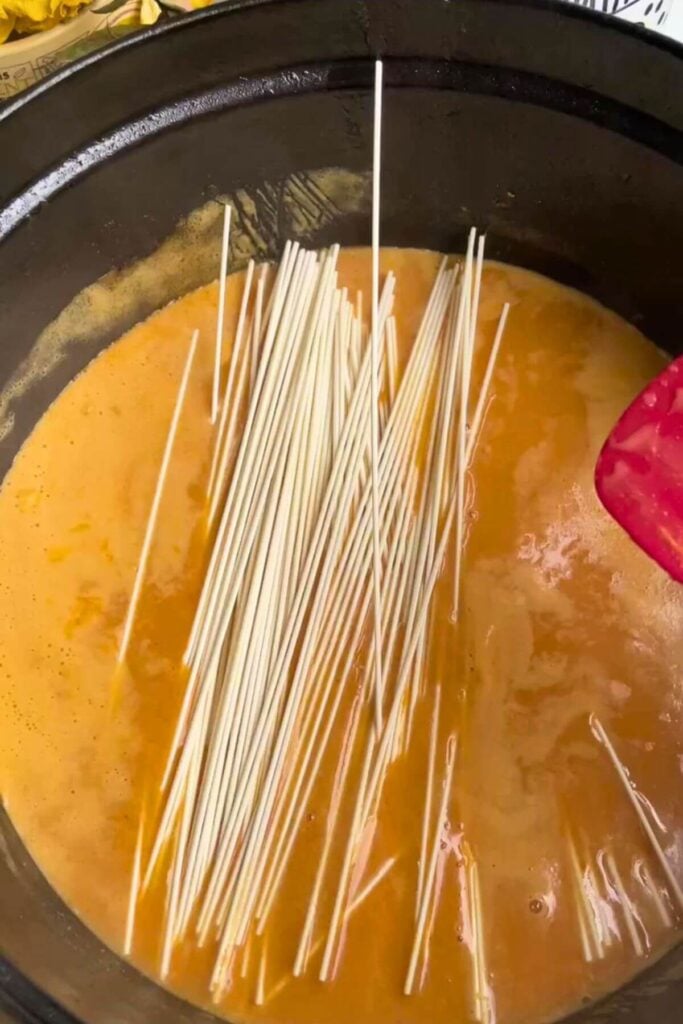
- Leave the sauce to simmer for a few minutes, then add your noodles directly into the sauce and leave them to cook.
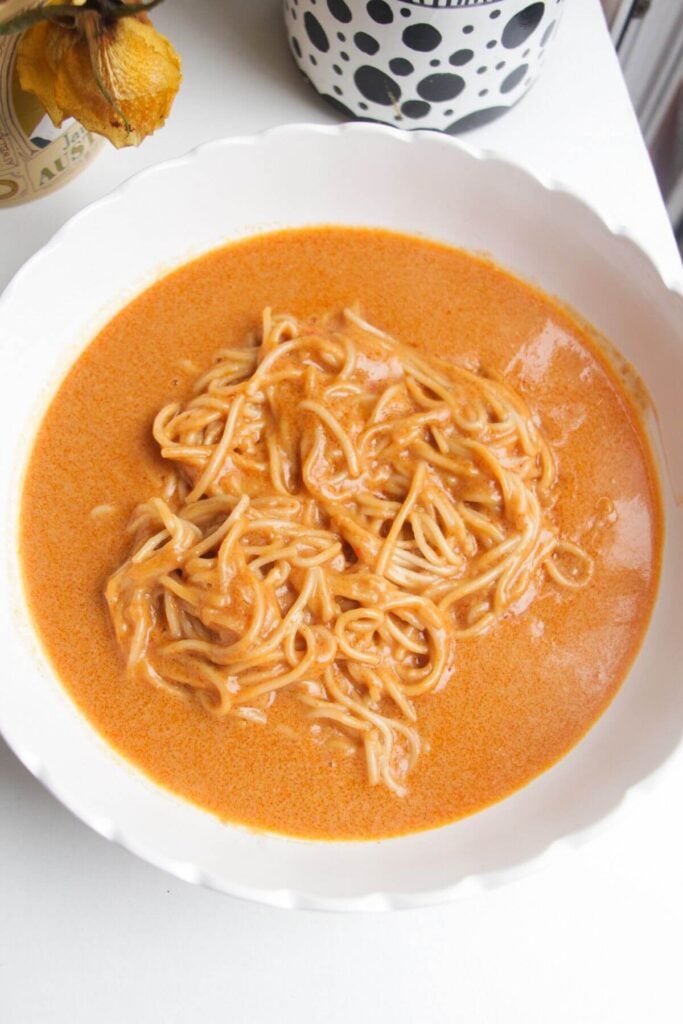
- Divide the noodles and broth between your bowls.
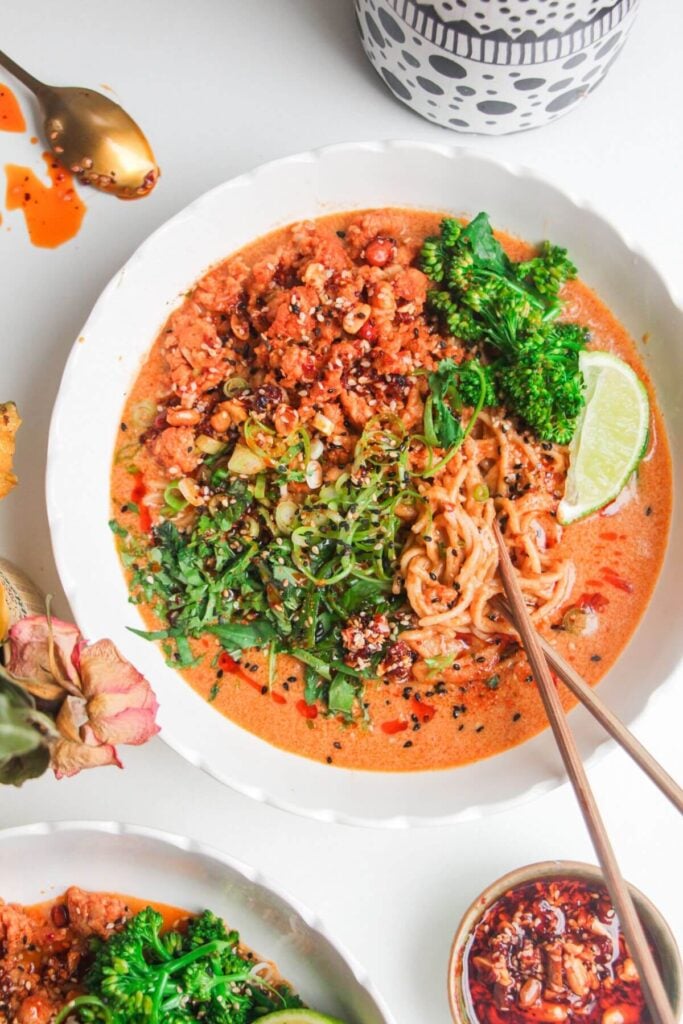
- Add the gochujang chicken and your fresh toppings, then serve while hot and super saucy.

Kate’s Tips for the Best Satay Noodles
- Loosen your sauce as needed. Because we’re cooking the noodles in the sauce, it will thicken from their starch and from the peanut butter. Add another splash of hot stock or water to loosen things up if needed.
- Check your noodle cooking time. Different noodles cook at different speeds, so make sure you’re double-checking your packet so you know how long to leave them cooking in the sauce.
- How to make it less spicy. The finished sauce really isn’t very spicy, but if you’re worried or cooking for kids, reduce the quantity of gochujang and skip the chili oil.
- Don’t skip the fresh finishes. At a minimum, make sure you’re squeezing fresh lime over the noodles at the end – it lifts the richness of the peanut butter and coconut milk. The fresh herbs also help with this.
Watch How to Make Satay Noodles
Satay Peanut Noodles FAQs
You can! They’ll keep for 3 to 4 days, stored in the fridge.
Just note that the noodles will absorb a lot of liquid as they sit. So I prefer to reheat them on the stovetop, adding a little water (or stock) to loosen them up again.
You can microwave them too, just add a little liquid when you do.
You can really play around here, based on what you like and what you have on hand.
You could add frozen edamame beans, peas, green beans, pak choi, or asparagus.
If you don’t want to make the chicken, you can skip it or use crumbled tofu.
I love using ramen, but really any will work well. Udon, egg noodles, rice noodles, even spaghetti.
Just check the package instructions for the cooking time, and adjust that when you add them to the sauce.
You can! There are a few simple swaps you can make:
– Skip the chicken and use crumbled or torn tofu, or a plant-based meat alternative.
– Swap the fish sauce for extra light soy sauce, or tamari.
There are a couple of reasons for this.
The peanut butter will thicken as it heats and cools, and because we’re cooking the noodles in the sauce, they release their starch into the sauce, which acts as a thickener.
And, the noodles will continue to absorb the sauce even after they’ve finished cooking. You can add a splash of hot water, hot stock, or coconut milk, and stir until the sauce loosens again.
Like this recipe? Try these satay-inspired ideas next
If you make this recipe, I’d love to hear from you! You can leave a recipe rating and a comment below. And remember to tag @DishedByKate on Instagram, Facebook and TikTok if you’ve made one of my recipes. Seeing your recreations really makes my day 😊.
One Pot Saucy Peanut Satay Noodles with Chicken
Ingredients
Method
- Make the sticky gochujang chicken. Set a large saucepan over medium-high heat. Drizzle in 1 tablespoon of sesame oil, then add your ground chicken, crushed garlic, 1/2 teaspoon of salt, 1 tablespoon of gochujang paste, and 1 tablespoon of honey. Cook, stirring, until sticky, crispy, and cooked through, roughly 7 minutes. Remove the chicken from the pot and set it aside for now.
- Cook the aromatics. To the same pot, over medium-high heat, add another 1 tablespoon of sesame oil, followed by 1 tablespoon of gochujang paste, 2 teaspoons of fish sauce, 1 tablespoon of sweet chili jam, 1 tablespoon of soy sauce, the crushed garlic and ginger. Cook, stirring, for a couple of minutes.
- Add the peanut butter, stock, and coconut milk. Once the gochujang is looking a little deeper in color (and smelling glorious), add 1/3 cup of peanut butter. Stir it through the aromatics in the pot, then pour in the coconut milk and 5 cups of chicken stock. Use a whisk to mix the peanut butter gochujang base into the broth. Bring to a simmer, then reduce the heat to low and leave for five minutes.
- Blanch the broccoli. While the broth simmers, add the broccoli florets to a large heat-proof bowl. Boil your kettle, then pour the boiling water over the broccoli. Leave for 2 minutes, then drain and set the broccoli aside.
- Add the noodles. After five minutes of simmering, add your noodles directly into your peanut butter sauce and cook according to the packet instructions. Stir the noodles through the sauce so they don’t stick together and cook evenly.
- Garnish and serve. Once your noodles are cooked, divide them between serving bowls. Top with the sauce, then spoon the sticky gochujang chicken on top. Divide the blanched broccoli between bowls, then scatter with the sliced scallions, cilantro, Thai basil, and sesame seeds. Finish with a good drizzle of the chili oil, and serve with lime wedges on the side.

I followed the recipe exactly and it is amazing
So warming! Swapped out chicken mince for pork and used udon instead of ramen. With a broth this good, its great that the other ingredients are flexible.
So tasty! Made a vegetarian version with quorn pieces instead of mince. Reduced the noodles and added capsicum, green beans, and mushrooms. Also only used three cups of stock rather than five for a slightly thicker soup. So good topped with a sprinkle of lime and sesame seeds. Will definitely be making it again! Yum!
Hi Alex 🙂 Ahhhh I’m so happy you enjoyed it! LOVE these additions too – I need to try them out, sounds amazing xx Kate
I made this with miso paste instead of gochujang paste and beansprouts as veggie.
It was delicious! 10yo and 13yo both loved it.
Hi Indri! I love the gochujang/miso swap, that sounds amazing. Bean sprouts would have been great too, so happy the kids enjoyed it xx